

Artificial Intelligence is no longer a technology of the future. It is becoming one of the most powerful tools for transforming the way tolling operators manage their day-to-day operations.
For decades, the industry has relied on technology, processes, and human expertise to identify vehicles, process transactions, protect revenue, and deliver services to millions of road users. Today, however, the industry faces new challenges: rising operating costs, higher customer expectations, increasing volumes of data, and the constant need to maximize revenue collection.
At Emovis, we see AI as an intelligence layer that enhances every stage of the tolling value chain. It does not replace operational expertise; it delivers better data, greater automation, and stronger decision-making capabilities.
Here are seven ways AI is already transforming tolling operations, explored by Adrià Ferret, New Solutions Manager at Emovis, who shares his perspective on how Artificial Intelligence is reshaping the tolling industry.

1. Reducing Revenue Leakage: Ensuring Every Vehicle Counts
One of the biggest challenges for operators is ensuring that every vehicle using an infrastructure is correctly identified and processed.
Traditional systems can struggle with poor image quality, adverse environmental conditions, or complex identification scenarios. AI enhances image interpretation, pattern recognition, and accuracy—including capabilities such as vehicle fingerprinting and deduplication—thereby reducing missed transactions and protecting revenue.
For years, the industry needed to combine multiple sensors to detect a vehicle, and even then some cases were still missed: dark-colored vehicles, sunroofs, heavy rain. Today, computer vision enables the camera itself to solve many of those cases independently, including damaged license plates that were previously beyond reach. This is where the real impact lies: it is not simply about replacing hardware with software—it is about recovering lost revenue.
2. Reducing Operating Costs Through Intelligent Automation
Operational efficiency is one of the highest priorities for tolling organizations. AI helps eliminate unnecessary manual processes, allowing teams to focus on activities where they add the greatest value.
A clear example is Manual Image Review (MIR). Traditionally, operators required significant human resources to review large volumes of vehicle images. Today, AI can automatically analyze those images, determine confidence levels, and reduce manual reviews from approximately 10% to between 1% and 5%, delivering significant savings without compromising accuracy.
One of the most remarkable changes has been the dramatic reduction in manual image review across tolling, thanks to better algorithms—not at the expense of accuracy, but because of it. At the same time, conversational assistants are handling a significant share of interactions that previously required human agents, providing faster and more consistent responses. That combination represents one of the most significant transformations currently taking place across the industry.
3. Creating Smarter Customer Service Experiences
Customer expectations are evolving. Drivers expect faster responses, personalized communications, and support whenever they need it.
AI-powered solutions such as chatbots and voicebots help tolling operators transform their customer service centers by handling routine inquiries and reducing response times, while enabling human agents to focus on cases where empathy and experience remain essential.
Customer expectations have changed dramatically. People no longer want to wait until office hours to find out whether they have an outstanding balance—they want answers immediately. This is where chatbots and conversational assistants deliver the greatest value. They are increasingly capable of resolving real account-related inquiries, not just answering generic questions. Most importantly, when implemented effectively, AI does not replace human interaction—it frees people to focus on complex cases that genuinely require empathy and judgment.
4. Improving Accuracy Through Human-AI Collaboration
AI not only increases automation; it also improves process accuracy by identifying errors in traditional algorithms and detecting inconsistencies during operations.
In tolling, even small errors can directly impact customer experience, operational efficiency, or revenue protection. The future of tolling is not about replacing people with technology—it is about creating a collaborative environment where both people and technology strengthen each other.
AI does not simply automate decisions—it also helps validate them. Increasingly, systems use AI as a second layer to compare human decisions against expected historical patterns. When something does not match, an additional review is triggered. AI does not replace human judgment—it validates it, while people continue to correct AI whenever necessary. Operators who embrace this model as a form of cross-verification will build far more resilient systems.
5. Optimizing Outstanding Payments and Fraud Detection
Revenue protection does not end once a vehicle has been identified. AI can analyze behavioral patterns to identify which users require specific communication strategies, thereby improving the efficiency of recovery processes and supporting fraud detection.
Rather than applying a single strategy to every case, operators can use data to determine the right timing and communication channel, increasing the likelihood of successful recovery.
For many years, the industry treated every debtor in the same way: the same process and the same notification schedule. AI now enables operators to analyze each user’s behavior and tailor the strategy accordingly—deciding when to contact them, how often, and how much supporting evidence to include with each claim. Every notification sent without sufficient supporting evidence represents a missed opportunity—not only to recover revenue, but also to build trust.
6. Making Roadside Infrastructure More Efficient
AI is also transforming the way operators design, deploy, and maintain roadside infrastructure. Through computer vision, operators can optimize camera usage and reduce reliance on additional sensors, simplifying deployments while lowering hardware costs.
AI also enables predictive maintenance. Rather than relying on fixed maintenance schedules, operators can monitor the actual performance of roadside equipment and anticipate issues before they affect operations.
As cameras become increasingly capable, less complementary hardware is required, making deployments both simpler and more cost-effective. Maintenance strategies have also evolved. Instead of following fixed schedules, maintenance frequency can now be adjusted based on the actual degradation of each asset—extending intervals in benign environments while bringing maintenance forward in harsher conditions, such as higher temperatures or greater salinity.
7. Transforming KPIs into Continuous Intelligence
Performance measurement is essential for every tolling operator. AI enables organizations to move beyond periodic measurements to continuous, automated monitoring by assessing vehicle-detection quality and overall system performance in real time.
This capability creates greater transparency between operators, agencies, and technology providers, while increasing confidence that any deviation can be identified quickly.
Measuring the performance of a vehicle detection system once meant sampling—reviewing short video segments at selected moments and extrapolating the results. While representative, this approach was inherently limited. If an issue occurred outside that sampling window, it could easily go unnoticed. With computer vision, the system automatically validates the vast majority of transactions, reserving manual review only for cases of uncertainty. That is the true meaning of continuous intelligence—not simply measuring faster, but measuring in an entirely different way.
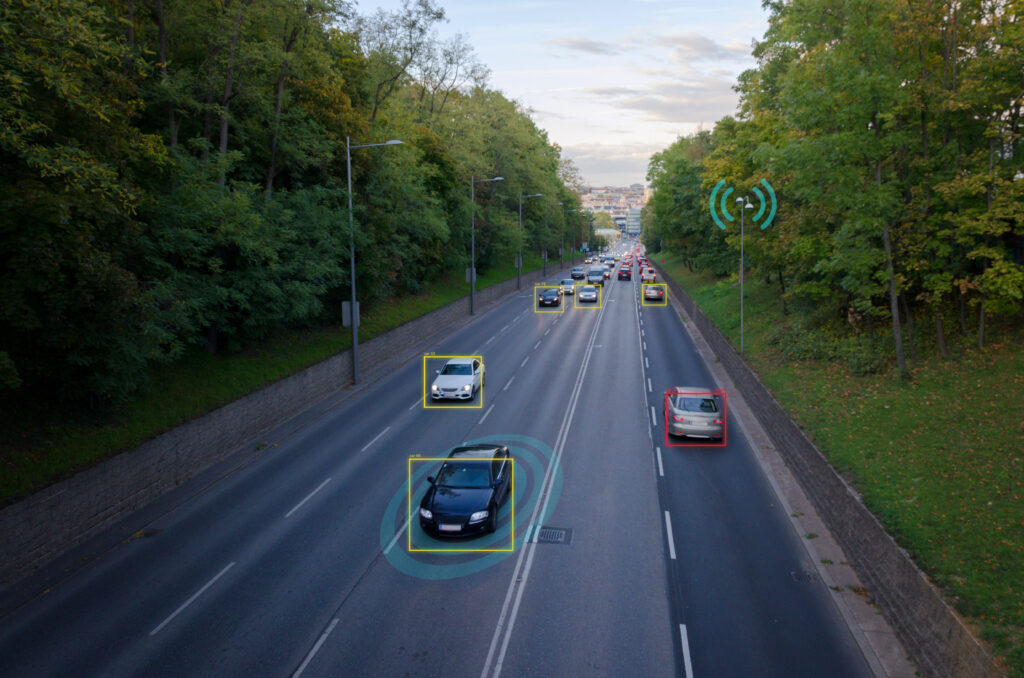
Artificial Intelligence is transforming tolling from a technology-driven industry into an ecosystem powered by intelligence, data, and predictive capabilities.
From revenue protection and customer experience to operational efficiency and roadside infrastructure, this transformation is not about replacing people with machines. It is about combining AI’s analytical capabilities with the decades of operational expertise accumulated by professionals across the industry.
At Emovis, we strike a balance between artificial intelligence and human expertise to deliver tolling operations that are more efficient, more reliable, and future-ready.

News • Aug 11, 2026
Emovis successfully goes live with its Operational Back Office platform for VíasChile
Article • Jul 30, 2026
AI For Tolling: Beyond AI – 5 Questions About How Agile Thinking Is Transforming Tolling
News • Jul 15, 2026
Emovis evolves into an AI agentic organization to address future challenges
Article • Jul 14, 2026
AI For Tolling: 7 Reasons Why AI Is Transforming Tolling Operations Forever
Article • Jul 01, 2026
Driving Tolling Insights: Beyond Collection: Rethinking Revenue Assurance
Article • Jun 29, 2026
LiteToll: The Shift from Infrastructure-Centric Tolling to Intelligence-Driven Architecture
News • Jun 25, 2026
Abertis Senior Leadership Visits Emovis Miami Headquarters and Reinforces Strategic Commitment in the U.S. Market
News • Jun 19, 2026
Completion of Five Gantries Marks Key Progress in ATMB’s Free-Flow Tolling Project
News • Jun 05, 2026
Emovis engages in Europe’s mobility transformation dialogue at ASECAP Days 2026
News • May 26, 2026
Emovis Highlights the Transformation of Free-Flow Tolling at the ABC Forum in Madrid
News • May 08, 2026